
Energy efficiency analyses for systems and processes
Based on an in-depth energy efficiency analysis, an audit or pinch analyses, we examine and optimize your systems and processes with regard to system efficiency, untapped potentials, energy consumption and costs.
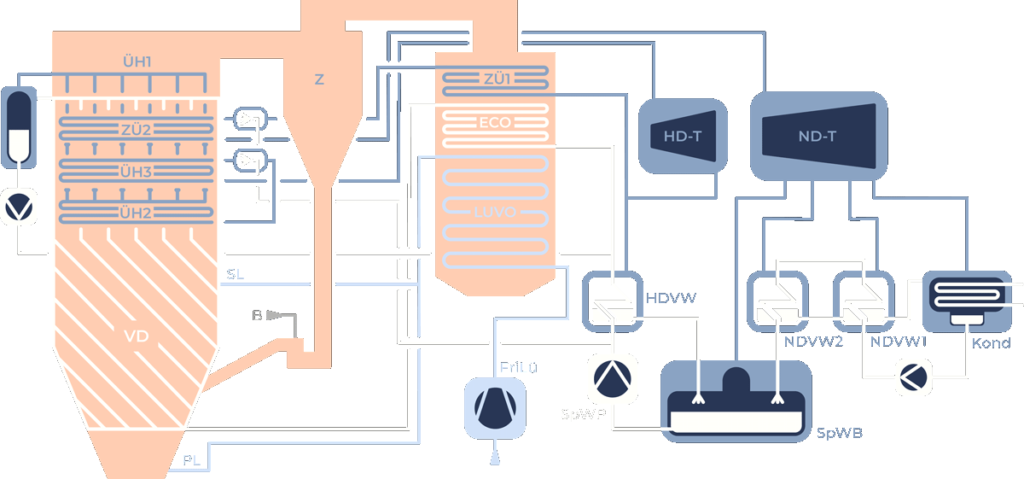
Optimize energy system and reduce operating costs
In many systems and thermal processes, there is hidden, untapped energy potential that can be identified through comprehensive energy efficiency analyses. Based on this, measures can be taken to reduce unused energy flows. We have many years of experience in the field of energy technology and thermodynamics and are able to examine various processes and evaluate possible potentials with regard to technically and economically viable development. We use different methods, from pinch analyses to a data-based or physical digital twins.
Our services

System analysis / Energy audit
Comprehensive system analysis for recording and evaluating energy consumption in systems and processes to identify savings potentials and measures.

Pinch analysis
Recording / evaluation of energy and material flows to identify unused energy potentials as part of a pinch analysis.

Optimization using digital twins
Development of an energy system model / a data-based digital twin for model-based or data-driven analysis and optimization in stationary or dynamic behavior.

Feasibility studies and transformation plans (BAFA-compliant)
We accompany you on the path to climate neutrality through individual feasibility studies or the preparation of transformation plans.
What is an energy efficiency analysis?
As the name suggests, an energy efficiency analysis involves examining the efficiency of a system or an energy-related facility. The overarching goal is to identify measures to increase system efficiency. This is primarily intended to reduce operating costs. There are various types/methods for conducting an efficiency analysis and subsequent optimization: from energy audits to simulation using a digital twin of the plant or process.
Essentially, all methods are based on examining incoming and outgoing energy and material flows to balance losses and identify untapped potential. Therefore, an energy efficiency analysis begins with data collection / a measurement campaign or the evaluation of existing data. The focus includes electricity consumption, consumption of energy sources for production processes, compressed air supply, and other material flows that are supplied to or leave the facility. By establishing an energy balance, losses can be quantified and potentials identified.
Based on this, measures for improving system efficiency are derived. Opportunities exist, on the one hand, in increasing the efficiency of individual processes, e.g., by reducing losses, or in heat recovery, for example, through heat exchangers and heat pumps.
We not only identify potentials for increasing energy efficiency, but also provide support through system dimensioning, funding advice, and economic feasibility analysis.
Why does an energy efficiency analysis make sense?
Energy procurement costs have risen significantly in recent years. Fossil fuels, in particular, will become significantly more expensive again in the coming years. This is primarily due to the expansion of European emissions trading and a corresponding increase in CO2 prices. Furthermore, an increase in grid fees is also likely. Due to these framework conditions, the energy efficiency of plants and processes is gaining importance. An energy efficiency analysis is the basis for improving system efficiency.
That's why you should work with Theta.
We are engineers specializing in thermodynamics and energy technology with many years of experience in analyzing and optimizing a wide variety of processes. Thanks to our scientific background, we are able to analyze even the most complex processes and, if necessary, gradually optimize them through special solutions such as digital twins and numerical simulations.


